Thursday, September 14, 2006

My Old Friend Pain
Of late, the state of my health and my corresponding mood seems to be fluctuating with eerie consistency between the extremes. When I am feeling healthy and my internal workings are “open”—for business and pleasure—my mood is accordingly good. I am happy and grateful for everything, starting and ending with my health. Praise the Lord.

Then, seemingly out of nowhere (and apparently unrelated to diet, though pot is a definite no-no), the symptoms return in full force and I am back “in Hell,” swallowed up by bitter despondence and nigh-suicidal despair. Thus disposed to dwell upon my misery, I no longer desire do anything besides eat, read, watch movies, anything, in short, that permits me withdraw from a now untenable reality. This extreme shift of mood—which in the past would have required several days at least—occurs sometimes in a matter of hours. Back and forth I go, a cosmic yo-yo of a soul.

At crux of my misery is not just the relationship I have with “my” body—i.e., that between my mind and body—but with external conditions in general. (It may seem odd to speak of the body as an external condition, but to the mind that is exactly what it is.) When the body is in revolt—if such it is—the mind also rebels. Perceiving the body as the enemy, it says, “Fuck you! I’m gonna do whatever the hell I want to do, whether you like it or not!” Not that this entails any extreme forms of hedonism, you understand, but at the very least a stubborn and defiant decision not to meditate. Why should I meditate if my body is gonna act like this? Screw you, body!

This madness is the result of my constant awareness of a rigorous force or intelligence, separate from the ego but nonetheless forever present. (Face it, the ego is separate from everything; the ego only exists in, as, and by separation.) In my madness, I end up pitting myself against this force—call it God, Spirit, True Will, or just plain common sense—exactly as if it really were outside of myself. Everything becomes a manifestation of this force—a challenge, test, punishment, mockery, or insult. Even something as simple as a barking dog or bananas that refuse to ripen no matter how fucking long I leave the damn things in the Sun, such matters become living, tormenting examples of how the Universe—life—defies me and continues to turn up the heat, here in my personal, private Hell.

Yesterday morning, I realized that the problem—hence the solution—is really very simple. Every time I focus on an external circumstance, condition, or event that frustrates, disappoints, angers or oppresses me, I cast blame upon it for undermining my happiness, will, and well-being, as I would some invading force that exists solely to destroy my hard-earned piece of mind. How dare it!!?

The truth, however, is that what is undermining me is none of these things. What is undermining me is rather the thought, belief, the stubborn, egomaniacal conviction that there is anything outside of me at all that could ever have the power to undermine me. It is my insistence on perceiving things as happening TO me, rather than THROUGH me, that is the source of my torments.

If I am the lead player in the drama of “my life,” the only thing that can undermine my happiness, logically, is me.

There is a difference between pain and suffering. “Pain” causes us to “suffer,” just as pressure brought to bear on a structure may create tension within it. So far as we resist pain, we suffer. When we accept the pain, even though it is still there, if we are no longer judging it (or feeling judged by it), there is no longer any need to prolong it. Suffering is pain prolonged—by resistance—beyond what is strictly necessary.

I’ve come to see all physical pain (including so called “diseases”) as simply blocked energy and the pressure and discomfort that it causes. If so, what blocks energy? What prevents it from flowing down its proper channels? The answer, generally, is our thoughts, combined with the moods they create (and are sustained by) and any “bad habits” we adopt as a response to (or a reaction against) them, are what block the free flow of energy.

When our energy is blocked, we experience pain or dis-ease. What is then required, usually, is to reverse the (emotional-mental-physical) pattern that caused the blockage. We have to break the habit and free up the trapped energy, and so relieve the pressure. The trouble is—as we all know from bitter experience—this situation creates its own vicious circle. Bad habits (negative thinking and moods) block the flow of energy, resulting in pain, which hurls us into suffering. Then when we suffer, we become gloomy and despondent, self-pitying and resentful, and “take refuge” in sloppy behavior and “bad habits.” And so it goes: the suffering is compounded, and indefinitely sustained.

I think at base of this diabolic predicament is the fact that, in our present culture and society, we have not learned—are unaware even of the possibility—how to incorporate pain into our lives and transform it into something else. In our prevailing culture of convenience, pain is the ultimate undesired (and undesirable) commodity. Pain is what we will do anything to avoid, even when it is already too late and the only sane and responsible thing is to accept it and deal with it! Because we try to push the pain away, however—even when it most sorely needs our attention—there is no way for pain to be absorbed into (and so healed by) our larger experience.
By denying pain—with aspirins and antibiotics and TV and alcohol and comfort food and whatever other relief or refuge we contrive to find—we believe we are keeping suffering at bay. But we are only isolating it, keeping it separate and alive as a “thing” unto itself, and so making it impossible to assimilate. From such a lopsided perspective, “pain” and “suffering” exist for the sole purpose of undermining our happiness and well-being! And the pain never goes away, only grows and mutates in its special, isolate state, the dreaded “other” that can never be assimilated. Eventually it grows into something we cannot ignore, something that takes over our lives entirely. On that day, suffering becomes our lot, and the only sound advice would seem to be—that of Job’s wife to her sorely afflicted hubbie—“Curse God and die!”

Before we take such an extreme resort, there is an alternate option, however.

The alternative is to allow the pain, without judgment or resistance, to exist as part of ourselves, to accept it and take full responsibility for it and allow it to become—or rather to be—an integral part of our total life experience. Why not? That’s what it is, after all. If we do this, we may begin to see just how small in relation to everything else the pain really is. Pain is not a “thing,” any more than knowledge or love or happiness are “things.” Pain is one of countless distinct qualities of living, a single point of view in a vast array of perspectives designed to “flavor” our life experience.

I am learning to think of pain as an especially powerful spice: mix it with the rest of the ingredients and it adds a special “bite” (and body) to the meal, bringing out all the other flavors (by contrast), making the eating experience more intense and memorable. (It may even help us to digest the food afterwards) The addition of this super-spice, in moderation, rounds off the dish and makes it complete; it puts the meal as a totality into a nice, sharp perspective. So it is with pain.

If we refuse to use that spice, for fear of what it may do to us (ruin the meal?), and instead keep it on the side, what then? We are always going to wonder what it’s doing there, and we will simply have to use it eventually. We wind up eating the spice on its own just to find out what it’s like, and sure enough—just as we suspected—it inflicts the most horrendous experience upon us. How could anyone imagine such an evil spice was actually good to eat?! But we have completely missed the point of the spice, and probably given ourselves indigestion to boot.
My own predicament appears to be thus.

Certain channels in this-body-which-I-am have been blocked (by fear of and resistance to pain, probably of the emotional variety) for a very long time. I am now attempting to unblock those channels, and what is coming through them is a lot of long-repressed stuff—sadness, fear, rage, whatever the hell it is and wherever the hell it comes from, it’s easy to see why it’s been repressed. This is all the crap that has literally been bottled inside me for decades. So naturally it doesn’t feel good when it comes out; and since the body is already in the habit of “closing up” to protect itself from pain, this is precisely what it does. By doing so, however (by mistaking an internal process for an external ‘thing”), it only traps the old hurt inside; and what is inside us, as we know, is what can really fuck us up.

The result of this internal warfare seems to be that I get to enjoy a period of grace in which I feel “good,” having cleared some of that baggage/blockage/tension; the energy is flowing and I can eat and breath normally, I am happy and grateful to be alive, thank you, sweet Lord, for all Thy blessings. Then, since I’ve cleared the way for that stagnant, foul, putrid, long-denied shit to come up, the pain wells up again and the poor body goes back to its default setting of rigid resistance. At this point, it feels exactly as though I am back to square one, like nothing has changed and I have accomplished absolutely nothing for all my suffering. The pain is exactly the same. I succumb to fear, despair, resentment, anger, all the old habit patterns that were once used to suppress the pain. To Hell with you God! Just let me die, you sadistic fuck!!
But of course, this doesn’t work anymore. It’s too late, because things have changed. I am at least aware of the grisly process, and of what I am doing to change it. Something besides merely keeping the pain at bay is now underway.

In a sense—though not, I hasten to add, a masochistic one—I am inviting my pain to show itself, not to be shy, to come out and talk, tell me how it feels and what it wants. I am striving to accommodate it, give it a place to be, make it feel welcome, accept it, embrace it, assimilate the damn thing and be done with it. Wine it, dine it, and put it to rest once and for all. Bloody hell, so mote it be.

In the meantime, like a good host, I am obliged not merely to endure the company of this gruesome guest, but to make the most of him and try to enjoy our time together. Since I invited Pain to come visit, I must be civil. Now is time for us to spend some quality time together, to learn to understand and respect each other, as worthy opponents must, and to plumb the depths of our experience together. As traveling companions in Hell we venture onward, my old friend pain and I.

Monday, August 14, 2006

Who The Bleep Are They Kidding?
Recent stomach troubles have dictated a strict diet with very few of the foods I most enjoy permitted. Primary among these is, that old English staple, bread and cheese. Like Wallace, I am a cheese-eater through and through, and could happily have it with every meal if not for digestive considerations. No more. In the past month, the only cheese I have been enjoying has been at the movies, most copiously at the What the Bleep Do We Know? sequel, Down the Rabbit Hole, a movie that ought to carry a warning to lactose- (and lachrymose-) intolerant viewers: “Contains potentially dangerous levels of cheese.”
A quasi-documentary about “the fundamental truth of unity,” Bleep 2 is more New Age physics for lazy laypeople to ooh and ah over. In fact, it is more of a remake than a sequel, a compendium of stuff left out of the first movie, perhaps, and with nothing at all by way of upgrading in evidence. 2½ hours of ineptly staged dramatizations and waffling interviews with self-satisfied “experts,” and perhaps a half hour of original material to justify, however limply, its existence, Bleep 2 is a shameless cash-in on the first film’s success that suffers from all the failings of the original. Despite the larger budget and longer running time, the filmmakers have chosen not to develop their technique in any significant ways, revealing their utter complacency as “artists,” and betraying a smug simple-mindedness and appalling lack of imagination completely at odds with the “ground-breaking” nature of their material. I can only presume they considered the original formula to be already perfect and that, since it wasn’t broken, why fix it?

The first movie made money and seemed to spark interest and excitement in the most unlikely of viewers, viewers perhaps grateful that such ideas were getting air-time at all in a popular movie. Yet it’s hard to imagine a work whose style is so profoundly in conflict with its content, that juxtaposes such profound, challenging ideas with so daffy and clichéd an execution. The expressed end of the Bleep films appears diametrically opposed to the means employed. They propose to present a whole new paradigm by which to interpret our reality (and live our lives), a quantum weltanschauung if you will; yet the methods employed are so profane and uninspired that the result is rather to discredit (if not actually debase) the awesome concepts which these films are so gleeful to bandy about. By endeavoring to deliver the findings of cutting edge physics to the mass consciousness, the Bleep films are the quintessence of New Age reductionism. They present a lowest common denominated version of the Mysteries, selling audiences life-changing ideas in cozy, non-threatening forms, so that the masses can have their manna and eat it, feel “enlightened” without having to change in any meaningful way.

In a quantum Universe in which information determines the spin of each and every particle, the Bleep movies spin their information into one big, dull, self-satisfied blah. As with all things New Age, by focusing exclusively on a positive “spin,” they render the subject flat, two-dimensional. Throwing around words like God, eternal, absolute, infinite energy, consciousness, etc, with so little force or precision saps not only the words but the concepts behind them of power and vitality. The concepts may reach more people by being so diluted—thinned out—but at what price? This user-friendly, multiplex-tailored view of occult realities is as far from shamanism as art from kitsch (and kitsch is what the Bleep movies are).

Fuzzy-headed professionals talking about the power of the brain? People we would avoid like the plague at a dinner party holding forth on “avenues of reality, unborn” and “infinite tomorrows.” Please.

Words, words, words, but where is the spirit? Images that belong in a Gatorade commercial not in a movie about time and space. The magical Universe seen through the lens of the Bleep movies becomes the asinine universe. A supremely patronizing experience.

Wednesday, August 09, 2006

Some comments from the filmmaker Keith Gordon (Mother Night, The Singing Detective on my blue pill piece; for more on his work, check out www.divinevirus.com/muse.html)

KG:

I found (the piece) very moving. And it echoed deeply with some of my own thoughts and experiences (including some recent health problems involving food and craving).To me, I don't see the spiritual path as one of perfection as a goal. Sometimes it sounds like you still see the world in terms of duality (blue pill OR red pill). But the wisest and best Buddhist teachers I've had emphasize that it's all about integrating the spiritual and the mundane. Merging, not dividing. (blue pill AND red pill, particle and wave, craving and letting go of craving). That even Buddha was human, and not 'perfect'. That he too was subject to craving, aversion, anger, greed and all the rest. All he had done was learn to deal with it in a very profound way.The Buddha himself talked about both relative reality (where we all live) as well as absolute reality (the more 'perfected' spiritual realm), and saw both as real or true (and of value), depending on what one's point of view at that moment was.

There's a great book by Jack Kornfield called, 'After the Ecstasy, The Laundry'. He spoke to highly advanced spiritual practitioners in many traditions, and almost to a person they noted that even after 'enlightenment' experiences, they were still human, still vulnerable to all the same stuff, still got mad at their kids, or impatient in traffic. They just had new options on how to deal with those things when they manifested.'Perfection' to me is an illusion in itself. The universe could only form because of 'imperfections' in how primal matter initially spread out from the big bang. Most art is made meaningful by it's 'imperfections'. A 'perfect' world (or person) would be unchanging, cold, dead.Indeed, craving 'perfection' on the spiritual path seems to me just as destructive a craving as those for food or money or power. It's still a craving. But craving ('I can only be happy when...') is very different than a healthy impulse to grow spiritually, and open our hearts and minds to knowing and enjoying both the 'illusion' and 'the truth' - and remembering that neither is as neatly pure of the other as our craving (for order and answers) minds might desire.

Of course I know you already knew what I was saying from your piece (I have the feeling you are far more well read and deeply educated in these areas than I). But there was so much pain in what you were writing that I wondered if your heart and soul could hear what your brain 'knew'. So I was really reflecting back your own ideas.To me, that's always one of the trickiest part of any spiritual path. Getting the heart and soul to really take in a concept the brain 'knows', or just the opposite - getting the brain to really digest something that's already part of the wisdom of the body or heart.

One other, random comment on the piece - re the starving man vs. the glutton. My take would be that either one might 'enjoy' the meal more. It would depend who could eat it with mindfulness and awareness.The starving man would likely find more relief in the meal from his pain - but that's not the same as enjoyment. If that was the secret to enjoying life, then we should constantly be starving ourselves (literally and figuratively) so we could enjoy things. But that was the path the Buddha rejected (along with gluttony). Neither extreme allowed balance. Those that would torture themselves into truth seemed to find it no easier than those that tried to pamper themselves into it.Besides, if the glutton was truly obsessed with food, he might, subjectively, feel just as much relief, even if his body didn't really need it.

Just a thought...

Thursday, August 03, 2006

Why Oh Why Didn’t I Take the Blue Pill?
Meditations on the “Spiritual” Life


“The bright and morning star that fell did not fall alone, it tore down everything else with it, including me. Part of my own being fell with it, and I am that fallen being now.”
—Philip K. Dick, The Divine Invasion

Two days ago I saw an inverted rainbow. Naturally I wondered what it meant, as signs go. The first thought that occurred to me, besides that it was beautiful, was that I had been seeing the world upside down, and that it was time to correct my perspective. Like a living paradox, I had been standing on my head to get God’s attention. Now God was doing the same. If we create our reality, that includes God, right?

We never left the Garden. We polluted it with our garbage and turned it into a Swamp. Good fruit still grows here, we just have to find it. Seek, you will find, knock and it will be opened unto you. Don’t seek, and you won’t find. If you don’t knock, the door will stay forever closed.

We have to take the initiative, here and now. God doesn’t come looking for us. Only the devil does that.

Some of the profoundest words I ever heard, I heard in a song, Leonard Cohen’s “Stories of the Street”: “You are locked into your suffering and your pleasures are the seal.”

There is a Buddhist hell, called the Hungry Ghost realm, in which the damned soul is surrounded by food, an enormous stomach and a pin hole for a mouth. These souls “can never fulfill their hunger, so they are always filled with craving and desire. They can never be satisfied.” My situation feels like the reverse, a tiny stomach that will not allow food to enter, and a vast, gaping mouth that wants only to devour but cannot; not, at least, without suffering the torments of the damned as a result. But in either case, the hell is a hell of craving. According to Buddhists, the source of all suffering. I can definitely vouch for that.

For those of you unfamiliar with my predicament, I was recently infiltrated by hookworm, microscopic razor-fanged worms that gnaw into the intestines and drink the blood. The prescription medicine I took seems to have killed the critters, but in the process done untold damage to my intestines. The result is a continuous sensation of being blocked, sometimes all the way up to my throat, whenever I try to eat something (and sometimes even when I don’t). I am currently confined to fruit, porridge, soups and purees, which as you can imagine, leaves a lot of room for craving. This is a situation that may continue indefinitely, depending as it does upon factors beyond my control or even understanding. Hence, I have no choice but to accept the suffering and try to find the “lesson” in it; to use this affliction as a means to confront and overcome whatever psychological/emotional tendencies have caused it.

What this means in practical terms is that, for the first time in my life, mediation has become necessary to my survival. I have to get my energy somewhere, and without a couple of hours a day meditating and deep breathing, I appear to be wasting away to nothing. With it, however, I am slowly returning to life. Of course, never has the idea of meditation been so utterly, profoundly filled with dread as when the body feels like this. I am discovering the power of true will.

None of this is half so grim as it sounds at first glance. In fact, it is a source of joy. By entering bodily into the private hell of my mind to confront my demons, I am becoming free. This way lies freedom.

I am sharing some of these mediations with you, for no good reason save that I felt like it. Actually, there’s more to it than that. I am reaching out to you all, from deep inside my private hell, because I feel so horribly alone here.

Lucifer’s temptation, they say, was that of spiritual pride. I can vouch for this. Lucifer whispers in our ears that we can be as gods, that we may overcome our lower natures, our petty, grubbing selves, through nothing but our own efforts.

As most of you probably know, this is a “party line” I have long advocated. But no more.

The truth is, our grubby lower selves can never hope to overcome themselves, no matter how much they may simulate their desire to do so. Can a man lift himself up by his bootstraps? This is the essence, not of the impossible (nothing is that), but of the absurd.

The inhuman efforts of such unwitting spiritual clowning have killed many a noble soul, tricked by the serpent’s whisper into aspiring after the unattainable. I have been in danger of becoming one of them.

The snake Lucifer, in the present context, is the intellect. The intellect has a special gift: it can “prove” anything to itself, no matter how absurd. Mathematically, for example, it may be “proven” that an elephant can hang from a cliff with its tail fastened to a daisy. Once all the equations are formulated, however, reality is still there. The daisy breaks, the elephant falls.

There is no way out of the prison-hell of self save by accepting, once and for all, that there is no way out. Spirit can only take over when self surrenders. Only when we are completely emptied of the world can we be filled by spirit.

In Tales of Power, don Juan tells Carlos that a warrior is a slave of power. He uses don Genaro as an example, stating that, since Genaro has surrendered to the design of power, he has no choice but to serve the spirit through his actions, for the rest of his life. If he tries to live like an ordinary schmuck, he will waste away and die in no time.

It is time for a confession. My friends, had I known beforehand what the warrior’s path (the so-called “spiritual life”) entailed, I would never have embarked upon it. Not in a million years. In the words of my friend and fellow sufferer, Lyn Birkbeck, “It is hard beyond our dreams.”

I was tricked. I tricked myself, and now it is too late. There is no “Cypher option,” no blue pill, unless it be suicide: another absurdity, since we all know, deep down, that there is no such escape clause. We take our personal hells with us, wherever we go.

Although I still only have red pills to peddle, my advice to you all now is this: if at all possible, take the blue pill! The empty pleasures of our illusory personalities and tawdry desires offer sweet solace indeed, solace that is forever left behind once we embark on the warrior’s way. All that is then left are the obscene challenges of erasing the self, and of “serving spirit.” We become slaves to power.

Yet serving the spirit does not mean grandiose acts of selflessness. It is not what we do but how. And it all comes down to one simple feat: getting wholly into the moment, and staying there. The holy moment. Contemplate the boundless mystery of creation, every moment, and live, and do what thou wilt, and enjoy it to the full.

Give a starving man a bowl of rice. Invite a wealthy glutton to a ten-course meal made up of every imaginable delicacy. Who will enjoy his food more?

The simple life is the good life. The more we have, the less we appreciate what we have.

We can learn to enjoy what is there in front of us, however much it falls short of our desires. Or we can get everything we desire, and be unable to really enjoy it. Which is better?

Another wise trickster (A. Crowley) once wrote, “Only those are happy who have desired the unattainable.” I cannot vouch for this. Some day, perhaps. But not today.

I have for many long, hard years desired the unattainable, in the form of spiritual perfection, and mostly, it has made me miserable at the inescapability of my rank imperfections. It is far too late for me to go back, however. My yearning after abstracts has taken me so far from the ordinary, everyday pleasures of animal existence that I no longer find much solace within them (though God knows I try).

So be it. I accept my fate. I accept the indigestion, the craving, the daily torment, as necessary and true to the path I have chosen. But to wish it on another, to encourage it as The Way? This can only be basest folly. I begin to fathom poor Lucifer’s secret intent, the reason behind all the subterfuge. Is it anything else but sad desire for some company in His misery?

Here is the simple truth. The higher we aspire to “spiritual” goals, the harder we strive after them, the greater the toll will be upon our all-too-human selves, the worse the wear and tear on our lives.

There is no red pill. There is no blue pill. Such simplistic dualities only exist in movies.

There is no spirit. There is no matter. Such simplistic dualities only exist in books.

The means to attain joy in this life cannot possibly be by striving for another life that is “beyond.” More bootstrap pulling.

The pleasures of this world in front of us, the many-colored fruit for the picking, are pleasures that nourish the body and enliven the soul. They are here in the moment, where we belong, ever inviting us to partake of the Garden. This is not a test, this is a gift.

The pleasures of this world that are out of reach, the shiny baubles of success and happiness, satisfaction and spiritual perfection, our fond and endless anticipation of every next meal, next perk, next acquisition, these are but distractions. They are not promises, they are temptations, chimera to confuse the mind and keep it from focusing on the task at hand: cleaning up that swamp, and finding what fruit is still left, in our poor, neglected Garden of Delight.

Render unto Caesar what is Caesar’s, unto God what is God’s. Man does not live by spirit alone. Bread is also life.

If you honor the body, you serve the spirit. Neglect the spirit and the body will pay the price.

There is no “War of Opposites,” between light and darkness, body and soul, good and evil, warrior and gatekeeper. All just tricks of the imagination.

There is only a confused mind that has forgotten how to dance. Forgotten how to let the body do its thing, forgotten to enjoy life as it once did: as children at play in the Garden. Here in this Garden where there is only one thing God or Goddess ever wanted from us.

Our delight.

Go ahead and take the blue pill if you want to. Just be sure and enjoy the illusion.

“How you have fallen from heaven, bright morning star,
Felled to the earth, sprawling helpless across the nations!
You thought in you own mind,
I will scale the heavens;
I will set my throne high above the stars of God,
I will sit on the mountain where the gods meet
In the far recesses of the north.
I will rise high above the cloud banks
And make myself like the Most High
Yet you shall be brought down to Sheol,
To the depths of the abyss.
Those who see you will stare at you,
They will look at you and ponder.”
(Isaiah 14:12)

Tuesday, July 18, 2006

The Question That Thrives Us

This one from The Church of the Matrix was so silly I had to paste it here

ChurchOfTheMatrix:

"Is there a global conspiracy against the founders of the Matrix franchise? Some say that there exists a global conspiracy to topple the fan base of the Matrix films. Some say that the persona of Sofia Stewart (i.e. the Oracle) is a fictional fabrication of the federal government (i.e. Mr. Smith) to harness control over the Matrix fan base (i.e. rebel Zionists) and destroy the testimony of the Wachowski brothers (i.e. The Two Witnesses of Armageddon). According to the prophecy of Saint John's Revelations, two witnesses shall be sent by the Architect to preach the testimony of the Chosen One for three and one half earth years. At the end of that time, the Dragon shall devour the two witnesses of Armageddon. The Matrix was released in 1999 and Matrix Revolutions was released exactly three and one half years later in 2003. Now Mr. Smith (i.e. the Library of Congress, the FBI, and the California Supreme Court system) is about to destroy the two witnesses of Deus Ex Machina (i.e. the Wachowski Brothers). Since the Library of Congress is owned by Mr. Smith, we do not know whether the documents registered by Sofia Stewart are registered factual works of fiction or a fabricated delusion created by a global government conspiracy against the Wachowski brothers and the Matrix fan base. Therefore when the Wachowski brothers are stripped of their wealth and crucified before the masses by the governing global government like Jesus Christ was exactly 2005 years ago by Pontius Pilate, the question will inevitably be left in your hands to either see that the testimony of the Matrix trilogy whither away and die or be resurrected and immortalized in the light of the Matrix fan base that which is the body of the Chosen One (i.e. The Church of the Matrix)."

"The Church of the Matrix is neither for nor against Andy Wachowski and Larry Wachowski nor Sofia Stewart. The Church of the Matrix is founded on the principles of the search for the question. It is the question that thrives us. You know the question as well as we do. What is the Matrix? (i.e. What is Life, and why were we created?) Under these grounds we leave it up to you, Digital Soul Searcher, to ponder the relevance of the Matrix and The Third Eye. Be the first to read the complete version of The Third Eye by Sofia Stewart right here at www.churchofthematrix.org and decide for yourself. The choice as always is yours. We can only show you the door. You are the one that has to walk through it."
By the way, I am still seeking my lost book (MS), A Fool’s Journal, which I gave the nomme du guerre of by J.W. Horus. This was written in Morocco, during the period following my self/imposed exile (see Jake's Siddahtra complex, below), and recounts my adventures in desolation. The MS was abandoned into safe keeping with a mother named Helen and her several children, Christian et al, an English family living in Huelva, Spain, in the summer of 1992. They moved house a while later I was unable to track them down. 14 years later I am still hoping the book still exists, somewhere. Please contact me with any information on this book, or this family’s whereabouts! (Helen’s last name is not known to me, only that she was an English teacher, and a (then) single mother with several, now fully grown children.)

Thanks

Jake
Sofia Stewart contacted me some years back when I first posted my piece on Gnosticism and The Matrix
I always had my doubts about some of her cliams (such as the original release of Matrix being three hours long), but reserved final judgment, as a lot of what she said seemed quite credible, knowing what we do about Hollywood, et al. The latest at the site linked below, seems to suggest that there is certainly something rotten in Tinsel Town

Nnot to mention help account for why the sequels were so bad...

http://www.sophiaoracle.com/

Friday, July 14, 2006


I finally finished my Vampire screenplay. It’s been about a month since the first germ of the idea (which was simply, “I know, I’ll write a vampire script!”), and most of this time I’ve been sick to varying degrees. More sick than usual, I mean. This did not come as a surprise.
In the past few years, as a result of certain “evidence,” I have come to more or less accept the literal existence of “vampires,” albeit without putting much stock in the Hollywood fantasies of said beings. Nonetheless, the idea of an ancient race of superhuman entities that keep humanity as livestock and continue to control our thoughts and actions behind the scenes, both on a local and a global scale, has, I freely admit, become a more or less central tenet of my weltanschauung. It is also a primary strand in the tangled web of my own personal “karma,” as relates to my chronic health problems and overall gloomy and morbid state of mind. So why not incorporate some of this into a “trashy” horror script, and see what comes up? It has to be good for something besides bad health and a demented worldview, surely?
What turned up was Vampires, and not just the imaginary kind.
I guess you could say that there were three types of Vampire that showed up.
There were the ones I conjured with my imagination for this fiction, of course. These were drawn from my own investigations (and entanglements) into the Occult, and so like any other characters of fiction, at least partially partaking of everyday reality.
Then there were the Vampires which I “imagine” (or deduce) really do exist, non-physically, invisibly, and perennially, around or inside my energy field, sucking the life slowly out of me. These fiendish beings were no doubt stirred into a feeding frenzy by my decision to focus my creative energy exclusively on THEM. (And perhaps, did all They could to prevent me blowing the whistle on Them via this screenplay?)
And finally, for you skeptics out there, there was the very mundane, strictly physical (though still invisible) Vampire manifestation, in the form of an intestinal parasite known as THE HOOKWORM. These little critters come out of the Earth itself , a curious detail, since a theme of my movie is that humanity is the “real” vampire, and that the supernatural kind of Vampire is part of the Earth’s justice, or revenge upon us. Anyway, the hookworm (which apparently ONE IN FOUR people on the planet are hosts to) have no trouble getting under the fingernails (for example), and from there worming their way inside the body, using their tiny, microscopic teeth, which resemble razor blades. Once inside you, they continue to pierce the flesh with their miniature fangs in order—you guessed it—TO DRINK YOUR BLOOD.
The result of this is the usual insidious, relentless symptoms associated with parasites: exhaustion, nausea, diarrhea, and so forth, all of which I have been suffering pretty much constantly since I embarked on this script.
The good news is that it is finally done and, if the medication I’ve been taking is any good, the hookworms are on the run! I have managed to keep the script exactly to the page count limit stipulated by the industry, 110 pages, and registered it with the Writers Guild. I think it meets the requirements of the genre (simple, grisly, suspenseful, scary, possible to film fairly cheaply), while living up to my own standards for plumbing the darker depths of the human psyche, exploring the Vampire archetype and occult realities, etc etc. It even has a message of sorts. I like to think of it as Blade meets Blue Velvet (in the industry jargon), probably the closest I have come to a genuine “Trojan Horse” work, i.e., one that carries the plasmate but actually has a fair chance of getting through the Gates of Hollywood. It’s called The Keepers. Maybe the sequel will be called, Hookworm?

Friday, June 23, 2006

Recently I attempted to contact Richard Linklater (WAKING LIFE, SCANNER DARKLY) via his production company Detour Films. I asked them if I could send a copy of my book, DOGVILLE VS. HOLLYWOOD, to Linklater via them, as it contained a couple of pieces on his work. They wrote back saying they had a “firm an unalterable policy” not to receive any submissions there, but were good enough to give me the name and email address of Linklater’s agent, Beth Swofford. I wrote an email to Beth, at Creative Artists Agency (CAA) with same request, and when I heard nothing back two days later sent a reminder. I then received the following (which included my original emails), not from Swofford, or from any human willing to be identified, but from the “CAA machine” itself:

QUOTE: June 21, 2006 RE: JAKE HORSLEY - AGENCY REPRESENTATION - "DOGVILLE VS HOLLYWOOD, THEWAR BETWEEN INDIE CINEMA AND MAINSTREAM MOVIES"

Dear Mr. Horsley: We received your two e-mails dated June 16, 2006 and June 20, 2006requesting to submit literary material to Creative Artists Agency for Richard Linklater.

Although we appreciate your interest, we cannot assist you with your request. Moreover, please be advised that we have a firm policy of returning allunsolicited material unread. Accordingly, we are forwarding your two e-mails back to you and we have deleted your e-mails from our system. Your unsolicited submission has not been, and will not be disclosed to any executive or other employee of Creative Artists Agency or any other person.

You should be aware that many ideas are generated by ouremployees and our clients or other sources. To the extent that anyprojects are generated which contain elements similar to what yousubmitted, the similarities are purely coincidental.

Thank you for considering Mr. Linklater. We wish you much luck in your endeavors.

Cordially, CREATIVE ARTISTS AGENCY Submissions

Department Attachment cc: Beth Swofford -----Original Message-----From: jake horsley [mailto:jakehorsley@yahoo.com] Sent: Tuesday, June 20, 2006 9:52 AMTo: Swofford Asst, BethSubject: Linklater

Hi Beth
not sure if my last email got through Could you give me an address so I can send my book to your client, Richard Linklater, or would you prefer i send it to the CAA offices, care of yourself? If so,which CAA address should i use? thank you
best wishes
Jake Horsley

-----Original Message-----From: jake horsley [mailto:jakehorsley@yahoo.com] Sent: Friday, June 16, 2006 10:27 AMTo: Swofford Asst, BethSubject: Concerning Rick Linklater

Dear Beth Swofford

I'm writing to you to see if there is a way to send a copy of my recent book, DOGVILLE VS HOLLYWOOD, The War Between Indie Cinema and Mainstream Movies to your client Richard Linklater? As a great admirer of his work, the book includes short pieces on SLACKER and WAKING LIFE, and I think in general it's something he would enjoy reading. I'd be happy to get the publishers to send Richard a comp copy, if you can give me an address. Yours very truly Jake Horsley

END QUOTE

So how do you like them apples? Not only can I not send a complimentary copy of my book to (the supposedly “fringe player” and “alternative” filmmaker) Linklater, not only am I unable to contact him directly, but I am even deemed unworthy of making contact with HIS AGENT, and instead am passed onto the CAA Gatekeepers, to be rapidly processed and ejected, and firmly discouraged from daring to sully their pristine enterprise with my impertinent and wholly irrelevant requests ever again. Am I raving? Only mildly. I just thought this might be of interest to any of you out there who are attempting to make headway within the Industry, such as it is.

The “artists” are now so firmly “protected” from we poor, humble “fans” (or aspiring artists) by the cult of celebrity and the jealous edifice of agents, managers, and representatives, that it is, verily, as if they did not exist in the same world as we do at all. You would think I had tried to get into see the President rather than simply to send a book to a filmmaker whose work is included in it.

One more broken arrow.

Pull bow back, take aim again.

Tuesday, May 30, 2006


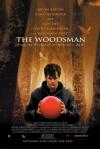
Match Point: How Woody Allen Shits Himself and Gets It Called Art

“I don’t want to achieve immortality through my works. I want to achieve it by not dying.”
“I don’t mind dying, I just don’t want to be there when it happens.”
—Woody Allen

I just saw Match Point, Woody Allen’s latest movie, though at the rate the Woodman churns them out, I imagine he will have another to inflict upon us before long. Match Point has to rate as the most excruciating movie ordeal since Nicole Kidman clipped her hair and fell in love with a ten-year-old in (the Stanley Kubrick-wanna-be fiasco) Birth. I see a lot of movies and a lot of them aren’t very good, in fact they are just plain bad. Once in a while I turn a movie off just because it insults my intelligence or else fails to hold my attention, or both. But it’s rare to see a movie that I just plain loathe, that makes me want to foam at the mouth and come up with as many vitriolic jibes as I can hurl at it. Like Birth (which I meant to incinerate at this blog but never did), Match Point attains this honored status.

Woody Allen makes a lot of bad movies. In fact, bad movies seem to be what Woody does best these days. Usually, they are just kind of embarrassing and hard to watch, with the occasional moment of sweetness or humor to just about get us through the squirminess of seeing a once-gifted artist thrash about, trying to pull off some really bad material without losing face. But once in a while, Woody makes what I’d call an offensively bad movie. The last one was probably Deconstructing Harry, and the latest is Match Point. Match Point has more in common with another offensively bad Woody movie, however, one called Crimes & Misdemeanors, which was a movie that some people considered a masterpiece, or at least a good movie. (The same was apparently true of this one.)

Like Crimes, Match Point is a moral fable whose moral is that morality is a delusion, and that crime pays if you can deal with the guilt. It has the same basic message as Crimes, namely, that it is not the fit but the morally vacuous who survive. Any movie that wraps itself around a message runs the risk of being offensive. A movie is not a fortune cookie, and messages are for postmen not for artists. But it’s understandable if we are more indulgent of sappy, life-affirming messages, no-brainer “do unto others” Christian type ones, since, like Hallmark cards, we know these messages (and movies) aren’t really meant to be taken seriously as art. Any movie that offers audiences an overt “message,” automatically foregoes its credentials as “art.”

Match Point, however, is a freak creation. It is what Woody does worst of all: a nihilistic message movie. The problem here is that the formula of message movies presupposes that life has meaning. Woe betide the message movie that attempts to provide a more sophisticated message, such as life is meaningless. To do so (to adopt the simple-minded formula of message movies) undermines and invalidates the very sophistication to which such a movie aspires. Morality fables have to be simple-minded in order to work. Amorality, on the other hand, stems from a certain intellectual sophistication, a conceit, that is obliged to scorn and reject all morality fables, along with morality in general. So what did the Woodman think he was doing?

If nothing else, Match Point proves that there is no such thing as nihilistic art, and that there never will be. Nihilism creates a void that no amount of artistry can fill. Put more plainly, the nihilistic sensibility is at odds with, and cancels out entirely, the creative one.

If Match Point had managed to be even dimly entertaining, its glum and cynical little “message” would have been tolerable. Movies like Blood Simple, To Die For, Silence of the Lambs, Sword Fish, and any number of hip, slick, violent Hollywood crime movies, celebrate moral emptiness and so give audiences a twisty kind of kick by letting it hobnob with “evil” and all its charms. Match Point wants to be Crime and Punishment redux, however, and (unlike Dostoyevsky) it’s not remotely entertaining, not for even a second. In fact, it’s sheer torture.

Woody is not someone who is temperamentally disposed to celebrate amorality. He is a former artist who (for reasons known only to him) wishes to expose it, and in the process, to take an ironic moral stance upon it. His movie is a vignette, a fable. But the simple-mindedness demanded of vignettes does not mesh with his queasy commentary on “the moral emptiness of our times”; it is like mixing cotton candy with caviar, and the result is perverse, self-indulgent, bitter, and, most unpardonably of all, smug.

There is a line in Match Point about how science is finally establishing that life is nothing but random chaos, devoid of all meaning. The line reveals the level at which Woody Allen is now functioning, both personally and creatively. Fifty years ago, this line might have rung true. Today, in the light of thirty or forty years of scientific endeavor, what with Sheldrake, Dawkins, Bohm, quantum physics and Chaos theory, the line hangs inside the vacuum of its own searing inaccuracy. In fact, recent developments have seen science entering into an uneasy tango with religion (or at least magic), and all this line does is to reveal Woody Allen’s rank ignorance and/or pathological denial as to “the nature of reality.”

As we all know by now, Woody has a horse to flog, even though a dead one. Life is meaningless; there is no God; there is no underlying pattern or moral order to the Universe, just random chaos and acts of despair that lead to the grave, to our final, total annihilation. What an inspiring (and original) message!

Woody’s terror of death used to be funny. It used to invigorate and provide depth and originality to his comedies. Now, as he edges over the hill of seventy, his fear of death has become all too real to him, and in consequence, to us. Now it hangs around his movies like a millstone around their necks, dragging them down into a swampy mire of the author’s misery and pessimism. Woody is so terrified of death that it is as if he doesn’t dare to laugh at it anymore. The result is, in his attempt to not “be there when it happens,” Woody Allen has all but disappeared from his movies.

Woody makes a movie a year, every year. He is like a one-man factory, a machine, as reliable as clockwork. No doubt this is at least partially from compulsion. As his death creeps inexorably closer with every passing year, Woody continues to grind movies out as if unable to stop himself. Certainly, he no longer seems to care — or dare — to take the time to ask himself whether they are worth making. Maybe this is his way of keeping himself distracted, from dwelling on the Big Question and so invoking the Great Terror? As if his paltry little works might somehow appease the Grim Reaper, shielding him from the horror of that gaping Abyss, as it reaches out to swallow him up forever?

I have news for Woody: they won’t. If anything, they are going to be waiting for him on the other side to mock and torment him.

I have a theory, and it is this: Woody Allen is literally shitting himself with terror at the realization that death is going to get him, one of these days soon. As a result, his movies, such as they are, have become like the turds he leaves behind him as he backs further and deeper into the catacomb of his denial.

Match Point is filled with the some of most thoroughly obnoxious and repulsive characters we have ever been obliged to fraternize with in a supposedly entertaining movie. I’m English, so I have a special “hard spot” for this kind of smug bunch of toffs and prigs mincing and prattling over inconsequentialities, lacking as they do a single redeeming feature between them. The movie had me yearning for a terrorist attack, for the sight of flying limbs and spurting blood and the sound of screaming. Was this deliberate on Woody’s part? Did he know how excruciating and wretched all of his creations were? Was this, perhaps, the point of his movie?

As I can see it, the only feasible reason to impose such a grotesque ragbag of shallow characters, inane dialogue, and torturously pointless scenes upon audiences was to leave them begging for some form of violent enactment to ease the agony of exposure to such dreary, soulless society. But then, when the killing begins, it is the American, and not any of the English prigs, who is targeted. Are we then to believe that Woody actually likes these characters, or at least enjoys their company? Awful as his depiction of English upper classes is, it is nothing compared to his attempts to present the inner workings of London policemen. Such scenes rank with Kubrick’s Eyes Wide Shut as the most gob-smackingly awful to appear in any major motion picture by a once great artist.

Like Kubrick, Woody has gotten a lot of mileage (and audience/critic/studio indulgence) out of a few really fine movies which he made a long, long time ago. In the eyes of most people, I suppose, once a genius, always a genius. A lot of people (though I doubt many English ones) actually hailed Match Point as a “return to form” for Allen, even though I think it may be his worst movie to date. Perhaps the shallow, flailing motions he made towards depth and insight and “postmodernist irony” were all taken as the real thing—as an artist and philosophical thinker sharing his own special wisdom with us, rather than as the hopeless thrashings of a fallen artist, drowning in the quagmire of his own despair.

True, the film’s ending is ingenious, but so what, when it is shackled to a movie as dour and joyless as this one, and when its only purpose is to drive home the director’s misanthropic message. The message of Match Point is that life is shit and everyone is a bastard, that it’s all random chaos so you may as well just commit murder, live an empty shallow life, and enjoy your creature comforts, because you’re going to be just as dead in the end anyway. Apparently, this passes for wisdom among sophisticated folk. Really, it’s just cheap cynicism. And where some people saw the strokes of a master artist, all I saw were shit stains on the wall of Woody’s cave.

Shame on you, Woodman.

Friday, May 12, 2006


Pay No Attention to the Woman Behind the Curtain
Harry Potter and J.K. Rowling’s Sleight of Hand

What is left to be said or done about the Harry Potter phenomenon?

First off, I must confess to never having read any of J.K. Rowling’s books, nor indeed to having any great desire to do so (a few pages has proved sufficient). Maybe some day I will get around to it and be pleasantly surprised, although I suspect that my bias against all things Potter is by now too strong and too firmly established for this to happen. Chances are I would be focusing on finding things to complain about—and doubtless be more than satisfied in my quest—to let myself be swept along by the story.

The movies are another matter. As a film surgeon and movie addict, and as a researcher of all things mythological in our predominantly movie-shaped culture, I have had little choice about seeing the Harry Potter movies. Nor, for the last couple anyway, has this been any great chore. (Actually, I never saw the second movie. Since the first was so unsurpassibly awful, and since the two films shared the same director, I steered well clear of it.)

Because the J.K. Rowling/Harry Potter phenomenon is so pervasive and formidable unto itself, however, it has proved all but impossible for me to watch and enjoy these movies purely on their own merits, or to resist the urge to place them within the context of their own flabbergastingly inflated success. The success of “Harry Potter’—inseparable from the money he has made—comes down to the degree to which the books and movies have colonized the consciousness of Western culture, in the process becoming a veritable meme (psycho-social franchise) unto themselves.

Of course, this is not really the case, because Harry Potter is actually part of a greater meme—that of teenage empowerment through magic—a meme that has been growing and mutating for decades. Needless to say, Harry Potter is not Jesus Christ, and J.K. Rowling is not St. Paul. Yet Harry Potterism has some (if not all) of the earmarks of a 21st century cult, even a religion, primarily I suspect because sorcery is a meme whose time has come. If so, Rowling and her fictional creation are the leading avatars of our day. So why do I feel such disdain, even contempt, for those who bow down at the trash altar of Harry Potter’s magic?

The third movie, from Mexican director Alfonso Cuarón, was imaginative, lively, and entertaining. The most recent, Harry Potter and the Goblet of Fire from director Mike Newell (all the films have been scripted by Steve Kloves, the unhailed auteur behind Flesh and Bone and The Fabulous Baker Boys), was less imaginative or lively, and considerably longer, but it possessed a new level of morbid intensity and visual flare, and managed to be mildly entertaining. It was also undoubtedly aimed at more mature audiences than the previous films.

Yet even these films left me thinking more about what they (and the source material) lacked, than contemplating whatever small virtues they do possess. When you get down to it, the Harry Potter franchise possesses one single major virtue—its subject matter. Leaving aside the question of literary merit (since I haven’t read the books), and judging solely by the movie adaptations, there is next to nothing (so far) in Rowling’s deft presentations of witchcraft and demonology to young audiences that can be called either original or inspired.

In ten years or so, Harry Potter has attained the kind of cult status—the fanatical following, mainstream popularity, and cultural clout—that it took Lord of the Rings half a century to achieve. And although Tolkien’s work could also be called a pastiche, a reworking of old (timeless) myths and fantasy elements, it did so with a full understanding of the archetypes it plundered, and of the reasons for their lasting appeal. As such, the books aspired to (and maybe attained) a mythic dimension all their own.

The Harry Potter series doesn’t aspire to, and consequently doesn’t attain, anything like mythic dimensions. Eschewing any interest in archetypal resonance, it is content to trade in stereotypes instead. In fact, besides the Dementors (which might have been inspired directly by Carlos Castaneda’s “Flyers”), I can’t think of a single lasting contribution that Rowling has made to the field of fantasy fiction. On the other hand, I could come up with an almost endless list of things that she has failed (or been too complacent and lazy) to do. But who has the time?
*

When the movie The Matrix came out, it satisfied and even surpassed the fantasies, dreams, and expectations of millions of teenage sci-fi heads, appealing to their sense of alienation and strangeness. Using familiar archetypes relating to heroic quests, the search for wisdom and transformation, it answered a need in young people to find their own means of empowerment and inspiration. The brilliance of the movie was in presenting sorcery as something that pertained to our daily lives, something that could lead us to a new interpretation of reality and of ourselves. And this is precisely what sorcery is: a new interpretation.

As some of you already know, I wrote a whole book (Matrix Warrior) that attempted to organize and interpret the movie’s ideas with the exact same end: that of providing empowerment and inspiration to the young and dispossessed. I doubt that I could write, to the same end, even a convincing couple of pages on the Harry Potter series, however. So little of it can be applied to our daily lives that there is little to say about it. Even more damningly, not much of it pertains to any existing traditions of sorcery.

To give the most immediate example, there are no sorcery schools to be found in occult history. If such schools existed (back in ancient Egypt, for example, or Atlantis, or even perhaps in the present day, hidden away in secret compounds beneath or orbiting the Earth), it is pretty hard to imagine they would in any way resemble Rowling’s Hogwort, a place where kids learn sorcery in a classrooms, sitting at desks, making fun of each other like regular school kids. Hogwort is a place where witches don’t even make their broomsticks and wands with their own hands, but instead buy them in a magic store. Where there are flying football matches and sorcery tournaments, and where fledgling sorcerers learn to fly before they learn to heal a common head cold. In a word, where sorcery is really just an additional commodity, within an otherwise conventional social milieu.

It may be countered that J.K. Rowling is writing for children, and can hardly be expected to show any great regard, or even respect, for the magical traditions which inspired her work. After all, it may be argued, children are not ready for a deeper understanding of magic anyway. But that is just presumption. How do we know what children are ready for?

J.K. Rowling has no qualms about depicting the intricacies of dark magic, complete with sadistic bloodletting, the summoning of dark lords via ectoplasm, and all the grisly and macabre intensity that such scenarios entail. Why then does she flinch from exploring with equivalent depth and intensity the sorcery of Harry and the other Hogwort students? Where, for example, is lucid dreaming? Why is astral projection given little or no play in her scenarios, a total no-brainer for enriching magical stories and something that both children and adults can easily understand and relate to?

Instead, we get endless tournaments, contests, trophies, much pomp and little circumstance, all of which anchor the fantasy world within the dreary confines of the public school system, and illustrate the sort of competitive narrow-mindedness that oppresses children everywhere, and which the idea of personal empowerment via sorcery is surely the very antithesis of. Besides the dubious effects of this on Harry Potter readers and viewers (that of strengthening the social doctrine of achievement based on competition and reward), it makes for pretty dull entertainment.
*

Any work that draws upon the Gnostic tenet of individual illumination is bound to bring about mixed, even conflicting, results. The Matrix—a true Gnostic work that inspired hundreds of viewers to seek out a deeper understanding of themselves and of “reality”—also led to two execrable sequels, not to mention everything from popsicles to coffee mugs. In the process it helped countless millions of “fans” to sink deeper into the socially-imposed stupor of our technological age, reducing the some of the brightest ideas to mere commodities, and assimilating and inverting its own message.

To give a less frivolous example: for the hundreds of Gnostics inspired by the example of Jesus to seek out their own illumination, countless millions are content to abide in sheeplike subjugation to Paul’s Christ and the Jews’ Jehovah. A genuine message of self-empowerment can lead (will lead) to the precise opposite result for the vast majority, by definition unable to grok such a message. Yet, in the exact same manner, false and shallow imitations of magical truths—works like Harry Potter whose message is really one of conformity—may also serve to guide a select and discerning few, beyond the imitation, to the real thing.

To give a well-known example, cheesy horoscopes on the back page of moronic tabloids, while serving to debase the ancient and noble art of astrology, may also provide enough of a taste for certain readers to seek out genuine knowledge from more worthwhile sources. Astrology is powerful enough, not only to survive such debasement, but to use it to its own ends.

Ditto sorcery.

No matter how poorly J.K. Rowling’s franchise may serve to propagate novel ideas relating to magic, alternate realities, and the hidden potential of human beings (especially adolescents!), it is still getting the basic ideas out there. It is probably pointless to lament the series’ lack of originality or vision, since it is just such humdrum, pedestrian qualities that have allowed the books and movies their enormous popular appeal, and hence influence, in the first place.

And for the millions upon millions being slowly stupefied by Rowling’s and Hollywood’s unimaginative, superficial, and stereotypical presentations of magic, there will always be a canny few wise enough to take the books and movies for what they are: crass commercialization of the oldest wisdom of all that nonetheless offers up its pleasures, while serving to pique children’s curiosity and stir the sorcerer within. Such readers and viewers will have little choice—if they are to appease that stirring—save to seek out deeper and more satisfying sources of inspiration. They may even, if so guided, wind up at play in the fields of Castaneda and the true sorcerers and magicians of the world, both ancient and modern. At which point, Hogwort will become just a memory, and Harry Potter will be cast aside along with all the other outgrown toys. Like training wheels that have served their purpose and become a hindrance and an embarrassment, such childish things are stashed away in the attic, when we are ready to ride.


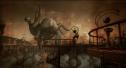
Mirrormask

For those seeking a genuinely magical (Gnostic) experience at the movies, I can’t recommend highly enough this recent film by Dave McKean and Neal Gaiman, easily the most inspired, creative, original, and visionary fantasy movie since The Matrix. According to Neal Gaiman (interviewed on the DVD), one Sony executive working on the film described it as “Like Cocteau’s Beauty and the Beast. On acid. For kids.” I think that’s a fair description, except for the fact that Mirrormask is definitely suitable for adults too.

The most richly conceived and imaginative use of CGI to date, Mirrormask takes place mostly in dreamtime, where McKean and Gaiman can flex their enormous creative muscles. That said, the prologue and epilogue, which occur in “real time,” are impressive too. McKean has a director’s eye and a flare for fantasy visuals to make the late, great Terry Gilliam green with envy. (Poor Terry, whose most recent film, The Brothers Grimm, saw him lost in Disney slums, must have suffered the torments of the deposed when he saw Mirrormask.)

McKean is a graphic artist, and he has no trouble translating his unique visuals to the cinematic medium. On the contrary, even while it is focused on the real world, the film is possessed of terrific vitality and has the visual confidence and flair of the best graphic novels. Once McKean and Gaiman take us into the dream world, however, all bets are off. When was the last time you saw a movie that kept you in a state of constant wonder and anticipation about what was going to happen next? In Mirrormask, every scene unfolds triumphantly to meet and surpass our hopes. The film overflows with visual delights, creativity, audacity, humor, and a suitably dark sense of the irrational. Any fantasy film worth its salt is going to aspire to the surreal, but it’s precious few that attain it. McKean and Gaiman join Méliès, Cocteau, the Quay brothers, and vintage Gilliam in achieving the ultimate goal of Surrealism, combining dream and reality to create a new interpretation of both.

Mirrormask is a very nearly blissful movie experience, an almost perfect blend of children’s’ fantasy (with the corresponding lightness and spontaneity) with the more disturbing subtexts of angst, despair, and schizophrenia that characterize the world of adults. For McKean and Gaiman, dream and nightmare aren’t at opposite poles. They meet comfortably in the middle, so you are never sure which way things are going to go. The same applies for “dream” and “reality”: there’s no easy way to say which is which in Mirrormask, because both partake of the same ingredients.

The common thread that runs through all the realms is sorcery. Mirrormask is everything that the Harry Potter films (even at their best) fail to be. It’s a movie that opens doors onto the hidden realms of the psyche, and invites us in to play. If you are going to make a movie about magic, you better know how to cast a spell. Harry Potter is passable stage magic. Gaiman and McKean are real magicians, and Mirrormask is their sorcery at work, and at play.

Thursday, March 02, 2006

Trying to Reign the Horsley?

Well I was sworn off further attempt to propagate myself into the world but a fella still needs to pay the rent, so a few weeks back I sent out some of the best material from Dogville Vs Hollywood to various publications, New Yorker on down. I sent out maybe a dozen emails with sample, and received only one response. From a still-forming new US magazine which I won’t name, I received the following:

Mr. Horsley,

I apologize for the length of time it has taken me to get back to you. I have read your piece(s). Here is my candid opinion, but do not be precipitous, I also have an offer for you.

Despite a rather loathsome opening ("chastity" and "whores" indeed, sir!), the body of the work demonstrated a nice grasp of film dialectics, cinematic history, all expressed in perfectly nice prose. Yet I found the whole to be a chore to read. Perhaps it was my time in graduate school with some rather cutting-edge seminars and tutelage under Timothy Murray (Like a Film, Drama Trauma, Mimesis, Masochism, and Mime: The Politics of Theatricality in Contemporary French Thought) but your piece has already been done to death. The corruption, in short, sir, begins at home.
Yet you are good at what you are doing.
My dilemma: how to use you while reining in your tendency to rant and excess.
My offer: send me a review of any current film (okay, within a year of its release). No Hitchcock or Kubrick or Coppola - unless its Sophia (ugh!). I want to see how you perform and how you engage your considerable talent and logic in a single, uh, stall and/or track (its that horse metaphor, you understand).
I want a full expository, context, relation of this film to ones similar (i.e. in the same genre/venue). Do NOT pontificate. The gate is open, Mr. Horsley, care to show me how you run?


End quote.

Needless to say i did not rise to this challenge but simply declined to be reigned (tho the idea of bucking this arrogant rider and send him flying certainly had its appeal!).

My wife thought the email so amusing she suggested i post it here, however, and so i have done

Sunday, February 26, 2006

Jake's Siddahtra Complex

Saturday Guardian February 25, 2006


I was born into money. At 18, I inherited shares in the family business worth half a million pounds. The dividends alone came to around £20,000 a year: back in 1985 a tidy sum indeed. As a result, the world never posed much of an obstacle, and questions of career or income, much less food or shelter, were never raised. So I did what anyone would - went shopping.

On an average day, I woke around 1pm, ate, drove my black Opel Manta to the West End and spent £200 on records, videos, comics and books. On less adventurous days, I rented three or four movies from the local video store, ate an M&S dinner, rolled five or six joints, and spent half the night getting high. If I already had movies, I often didn't get out of bed, just rolled a joint and turned on the TV.

On my 20th birthday, I moved to New York. Beyond the locale, nothing much changed. When I wasn't enjoying pot and movies in my Bowery bedsit, I was drinking tequila and snorting cocaine in an East Village bar. If anyone asked what I did for a living, I took great pleasure in telling them: "You're looking at it."

What no one saw, however, was that I was crying myself to sleep at night. What I wanted most of all was simply to fall in love. But when it finally happened, the woman in question would not, or could not, reciprocate. Suddenly, my life of luxury seemed a cruel mockery: since I could have everything except the one thing I wanted, I no longer cared for anything. A feeling of peace came over me - the peace of total indifference. In the absence of desire, I no longer had anything to gain, or lose.

I was in control of my actions for the first time. Since it no longer mattered what I did, I knew precisely what to do. I sold my shares and put the money into land, then signed the land over to a close friend. I packed up all I had left and gave it to a relative. I kept around £1,000 to fund my escape, but handed half of it out in £50 notes to passersby on Tottenham Court Road. My whole decision was the enactment of a personal fantasy: to go willingly from obscene wealth to abject poverty, and see how it felt. It felt strangely liberating.

I wrote a will and, without mentioning where I was going (only that I was), numbly said my goodbyes to family and friends. No one questioned my decision.

When you leap into an abyss, you don't have to take aim. I was fleeing from my life, and anywhere alien to my western sensibilities would do. I wanted to be reborn, I just didn't want to have to die first, and the masochistic vision that consumed me was of walking naked into the desert: somehow this image soothed my despair. Failing that, I figured I could simply smoke myself into a stupor and remain there indefinitely. So reasoning, I spent the last of my funds on a plane ticket to Morocco.

All I knew of Morocco came from the stories of Paul Bowles, a writer I admired and knew lived in Tangier. Even in my despair, I was drawn by the idea of meeting him, and by the seductive nihilism of his tales.

Setting foot in Tangier, however, my suicidal vision quickly dissolved into a new, much less comforting but considerably larger vista. As the demands of hunger and homelessness took over, I had little thought for suicide or transcendence, much less walking naked into the Sahara. Like most westerners, I had never experienced hunger before. Now it was all I could think about. I was sleeping in abandoned buildings; begging for change from incredulous Arabs and suspicious tourists; stealing bread from the market; occasionally fleeing for my life from murderous moslems. And getting high every night to stave off the unbearable despair (I could always raise 30p for a bag of kif). It was not a pretty picture, but it was what I had wanted.

No one knew where I was, or even if I was alive or dead. In poverty, I was free to reinvent myself, with no one to tell me otherwise. Unlike many beggars, this was what I had chosen to be. And I found that truth was indeed stranger than fiction: within a few weeks of arriving, I had a kif-smoking companion and benefactor - Paul Bowles. But that's another story ...

For the record, I never regained my wealth, nor regretted throwing it away (for more than a moment or two). With hindsight, it was less a whim that made me do it than simple self-preservation. Today I live, just barely, off the proceeds of my books, hand-to-mouth, and one day at a time.

First response so far, not counting family, is from Balloon Bill Morrison:

Jake. What do you know, your story about how you lived and or could have lived. Fascinating. Jesus! Quite a thing to do, give up a fortune. Man. Shaped you up good eh. Courageous fool? No, you live free as Siddharta ferrying the folks back and forth across the . . . I don't know; I'm looking for something here but don't find it. Anyway, apparently you got to write to live for two reasons, to live off a bit of money and because your heart needs it to live. (That, Liz and 'real' love of course). If you had the cushion of the dividends yearly not so much enlightenment, hard scrabble adventure, maybe not nearly the type or as much writing as you do eh. You know something most don't, to have given away ALL your possessions. That's got to be an assuaging thought, in the sense that you know what you can do, did, while others live mundane; you went bottom (TOP) so to speak, in order to rearrange yourself. Reborn. Died in a way and reborn eh. Killed off a part of you to replace it. So, THE STRENGTH COMES FROM you knowing what you can do to make an energizing life happen when push comes to shove. I sent the GUARDIAN piece to my Brother John who enjoys your adventures, work. Bill

Tuesday, February 07, 2006


Goodbye "Self": Hello Sun.
ABOUT THE SUN, the only real role model worthy of emulating, and the continuing woes of the unsung poet who wants only to SHINE

From a journal entry, 1998:

NEVER SAY DIE. The day will come when I will be acknowledged and a readership granted me. The trick is it seems to just get up after every fall, brush yourself off and resume the attack once more, with all the vigor and dedication of the last time. Each assault must indeed be as the first. A struggling writer can have no memory when it comes to rejection and brush-offs (or just plain being ignored), otherwise his frustration and disappointment will lead to a bitterness and despair that will eat away at him steadily and relentlessly until there is nothing LEFT. Above all he must tell himself constantly that he is only playing the game (because it’s the only game there is), and that whether he wins or loses—is ever published or acclaimed—is finally immaterial; what counts is his perseverance. So long as he knows what he is doing has worth and meaning, he will prevail. Indeed, the proving fire of the artist—as much as his own emotional anguish and sorrow in love and in life—is this period of unrecognition, oblivion, in which his only solace and encouragement comes from the very same genius which torments him and compels him to go on creating, against all the odds, to go on howling in the void. And even his doubts serve as part of this process of discovery: they serve to throw light on the rock of certainty upon which all his acts are based. There is no one who can tell me that vision is not mine; poetry speaks for itself, and wisdom holds forth even as it keeps its silence. Time has no dominion over it.

Eight years after first writing the above, and if I am honest, not much has changed. Since then, I’ve had four books published, a piece written about me in Fortean Times, the occasional online review, a piece due to appear in the Guardian, countless emails from devoted readers of Matrix Warrior and praise from such luminaries as Pauline Kael, Joseph Chilton Pearce, Ramsey Dukes, Kenneth Grant and Keith Gordon. And to be frank, I still feel largely “undiscovered,” and definitely underappreciated, as a writer. Which perhaps only goes to show that, so far as kudos go, this self will never be satisfied. The ego is a black hole that can never be filled.

And after all this time the question remains the same: does it even matter what “the world” thinks of what I do, even if I do it expressly to get “its” attention? Isn’t that just a subterfuge of the Id to keep me creating? After all, is there really any difference between a writer trying to find his or her “audience” and an infant trying to get mommy to notice it? Both come down to the same thing: “Look at me!”

I was whining to my brother (the semi-famous Sebastian) the other day about being a king without a crown (i.e., no one reviews my books). He responded that I had a crown, I just couldn’t see it. And isn’t the best kind of crown the invisible kind, that only a select few who get close enough to notice, and with the eyes to see, ever know about it? Isn’t that the kind of crown I want for myself? Or do I really want some big, gaudy, ostentatious thing weighing heavy on my head and attracting attention (mockery as much as reverence) everywhere I go? Like Elvis in his later years, or wacky Jacko? No fear.

Sovereignty comes from within, from being true to ourselves, from expressing — radiating — our inner (soul) natures to the fullness of our capacity. The joy of a performance is in the _expression and not the applause. The Sun shineth not in order to be worshipped. The Sun is worshipped simply for shining, never giving a damn about who it shines upon, much less what kind of reviews it gets.

I have just about worn myself out writing books and constructing web sites and sending emails trying to get NOTICED. Now I am going to try one more time to give all that up and say “DIE!” to the ego, so sad and insecure in search of aggrandizement from a world that never gave a damn. Said world is only any good to the artist as a foil, and it only ever really inspires us to create via its complete indifference. In which case, I am doing just fine being ignored. The virus that does its work unnoticed, is the virus that can really do some damage.

luvall
Jake

Wednesday, February 01, 2006


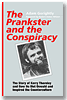
The Prankster and the Conspiracy
Adam Gorightly’s Excursion into Fringe History


Although Kerry Thornley is a minor player in world history, he is something of a key figure in the culture of underground literature, and is now the subject of a new biography by fringe writer Adam Gorightly: The Prankster and the Conspiracy: The Story of Kerry Thornley and How He Met Oswald and Inspired the Counterculture. Reading the book, it quickly becomes clear that Thornley is almost impossible to pin down, ideologically, professionally, or otherwise, and to his credit, Gorightly doesn’t even try put his subject into any kind of box. He seems less interested in writing a conventional biography than mapping (however roughly) a specific period in countercultural history using his subject as a departure point. The result is one of the few (non-autobiographical) accounts of those “freewheeling 60s” that fully captures the bizarre blend of optimism and paranoia, freedom and dementia, that characterized the period. Gorightly doesn’t pretend to be an impartial researcher of factoids, though the book is full of them (as well as hearsay and a generous concession to Thornley’s own self-mythologizing). He writes loose and easy, with an obvious regard but a suitable lack of reverence for his subject to do full justice to him.

The central thread of the book (as the sub-title makes plain), and perhaps the primary reason for Thornley’s minor celebrity in the conspiracy subculture, is his early acquaintance with Lee Harvey Oswald, whom he served next to in the Marines. Besides this, Thornley was a living anomaly: a writer, soldier, huckster, drugee, drop-out, bum, possible victim of mind control, occasional visionary and co-founder of Discordianism (perhaps best known to fans of Robert Anton Wilson, a supporting player in Prankster) and the Church of Sub-Genius. Thornley was also an early proponent of “paranoid awareness,” of which, ironically, he eventually became a victim (of too much paranoia, not enough awareness). In the period following the JFK assassination, during which Thornley was questioned by the Warren commission and under investigation by Jim Garrison (the dubious hero of Oliver Stone’s JFK), Thornley slowly became convinced that he was a victim of government mind control and microchip implantation, and even began to wonder if he wasn’t involved in the assassination without knowing it, a kind of “Manchurian Candidate” programmed killer. He also began to suspect that many if not most of his friends and associates (especially Wilson, who bore the brunt of Thornley’s persecution mania for a period) were government agents, keeping tabs on him and plotting against him.

Closer to an astral interloper than a historian, Gorightly explores Thornley’s labyrinth of paranoia from the inside, willing, perhaps even happy, to let the weirdness of his subject infuse him, until, like a good anthropologist, he has been all-but assimilated by it. Even though he never partook of the events described, by the end of the book Gorightly seems to have grown quite intimate with the spirit behind them. The writer’s sympathetic magic allows him to more or less seamlessly enter into the zeitgeist and weltanschauung of the period and its protagonists, and to take the reader along for the ride. It’s a twisty trail, all right, but fortunately Gorightly (for the most part, barring a few misguided attempts at drollery) keeps his eyes on the road and his hands on the wheel. As befits his subject, he manages to always seek out the absurd in what is essentially a tragic tale, that of a talented individual driven to the edge (and over) by circumstances beyond his control.

Based on this work at least, Thornley seems most interesting as a kind of cipher, a black hole for weirdness, a person around whom all manner of bizarre events and personages seemed to gravitate. The book leaves it open as to whether or not Thornley had a hand—however peripheral—in the JFK assassination (highly doubtful), or whether he was ever employed (and mind-controlled) by the CIA or any other military/intelligence agency (somewhat more credible). By the time you’re done with the book, such nuts-and-bolts questions probably won’t matter much. Thornley’s “madness”(he was never actually certified insane) not only seems to have resulted from having gleaned too much truth, but even—in a way that belies rational understanding—his madness may have been a higher truth unto itself.

Judging by this insightful, melancholy account of one man’s tragically inspired personal odyssey, not only will the truth make you crazy, but going crazy may be the only way to get to the truth at all. God gave man reason, then hit him with a reality that no amount of rationality could make sense of? Wouldn’t that be the ultimate prank (and conspiracy) of them all. . .

for more info: www.adamgorightly.com

Wednesday, January 25, 2006


Jeff the Empath : Door in the Floor and An Appreciation of Jeff Bridges' Ineffable Magic

Another recent movie I would recommend is The Door in the Floor, with my personal favorite Jeff Bridges, who finally has a good, juicy role to sink his enormous acting chops into. Jeff is a funny actor, because if he doesn’t have a good part or a solid project to bring out his Herculean talents, he tends to walk through a movie and be indistinguishable from any other actor, becoming a kind of non-entity (as happened with the execrable, New Age slop K-Pax, in which Spacey did his nice guy routine again). But when Bridges gets a role to suit him, such as The Fisher King, The Fabulous Baker Boys, Fearless, American Heart, or to a lesser degree Door, he carries the movie to another plateau altogether.

I first saw Jeff in Thunderbolt and Lightfoot, back in my teenage Eastwood-mania days, and I still find it interesting to watch the movie and see how much more likeable and empathic Clint’s acting is here than in any of his other films from the same period. From the start, Jeff Bridges had an easy affability, a lazy, laughing spontaneity, that made him both lovable and completely believable, and it’s clear in this movie that Bridges' immense appeal rubs off on Clint, and that the relationship between the two men (a young drifter and a hardened criminal who team up on a heist) was reflected by that of the two actors making the movie (Bridges was just starting out, Clint, maybe 15 years older, was by then fully established).

My personal favorite Bridges role has got to be Baker Boys, however; in fact it may be my all-time favorite performance by any actor anywhere (De Niro’s Travis Bickle and Pacino’s Michael Corleone would be two others). Here Jeff, as the Jazz-loving, piano-playing half of a cheesy musical lounge duo, gets to act alongside his real-life brother Beau, and there is such a natural affinity between them (even when fighting) that the movie really flies. (It was written and directed by Steve Kloves, who along with Keith Gordon may be the most underrated American filmmaker around.) When Bridges is at his best, the movie enters into magikal realms of empathy and humor that few other movies even seem aware exist. It doesn’t hurt having Michelle Pfeiffer along for the ride, either. She and Bridges make probably the most convincing and achingly doomed lovers ever seen on the American screen.

Door in the Floor, directed by Tod Williams (The Adventures of Sebastian Cole) from a book by John Irving (Williams wisely only adapted the first third of the novel), is an original and entertaining work. Though perhaps in the end it is a little removed from its characters and hence slightly less than fully involving, it at least avoids the sentimental pitfalls that some of the other Irving adaptations have fallen into. Above all, it has Jeff Bridges as the eccentric, philandering painter/children’s writer, Ted Cole. As Bridges plays him, Cole has hidden reservoirs of pain lurking beneath his abrasive charm. Cole has an irresitable (seeming) indifference to what people think of him, and there are few things more charming in a movie protagonist than not giving a damn about anyone. Although he has been written as something of a fraud and a jerk, Bridges gives Cole the freedom to create his own justification in our minds: he is a law (and a laughter) unto himself.

Bridges clearly revels in the task of creating Cole, and the delight he takes in fleshing out an already meaty role and making it his own fills every scene he's in to the brim. American movies rarely offer a greater high than Jeff Bridges on a roll, and Door in the Floor—though perhaps less haunting than it wants to be—offers just that, a chance to see America's finest, most empathic and most underappreciated screen actor flex his muscles.

OK, that's all for today. I am tired of writing now. This one's for you, Jeff.

Oh, i just found Jeff's personal web site and it's no surprise to find that's it's quite eccentric indeed, and definitely worth a look: www.jeffbridges.com


The Woodsman and the Root of All Evil

The Woodsman, with Kevin Bacon as a recovering pedophile. This one I liked, being a reformed pedo myself (just kidding, FBI surveillance members). It was surprising and refreshing to see everyone’s favorite “boogeyman” get a makeover and allowed ordinary human feelings, audience sympathy, and even, sort of, a happy ending. No doubt lots of people were incensed by the movie and considered it immoral because it evoked sympathy for someone who likes to have sex with pubescent girls (and even pre-pubescent, the character stipulates 10 to 12-year-olds). But it does an admirable job of telling its story first (which is really a character study, made effective by Bacon’s soulful and moving performance), and making its points second. The points it makes, predictably enough, center around tolerance and compassion, and the film shows pretty persuasively how regular folk’s fear and loathing of “pedophilia” (and the denial of their own propensity for it) only make the whole sticky problem worse, by refusing to even entertain the possibility of understanding.

The film dramatically illustrates the inevitable tension between the deviant and the society that rejects him, and how that tension itself gives rise to further deviance. It’s the oldest folly of all, the demonization of the other in order to project all our own unacknowledged neuroses, fears, and desires onto them. But oh, it’s convenient! The result is that what we fear and loath inevitably becomes more and more fearsome and loathsome the more we deny it and refuse to understand it. Because without understanding, there is no possibility of acceptance, which is the necessary prerequisite for change. If we only forgive the sinner once he has repented, what’s so admirable about that? Especially when we refuse to afford him our trust and compassion and sympathy and belief that he CAN change.

How is the sinner ever to repent, if he can’t first be forgiven, and forgive himself? All that self-hatred and the unbearable sense of being different, alienated, from others is what leads to the deviant’s neurotic drives to begin with. So it can easily be seen how society’s response to the “problem” (a problem which, after all, IT created), only exacerbates the problem further.God how I despise moralists!
"Morality is the root of all evil” - if I may be permitted to quote myself. (Matrix Warrior. Hey, it's my blog, man!)

The Woodsman is a slight, and apart from it subject matter, fairly conventional film. But it’s an affecting, graceful, intelligent work, with an astonishing and courageous central performance by Bacon; as such, it is definitely one of the best American movies of the past year.